


















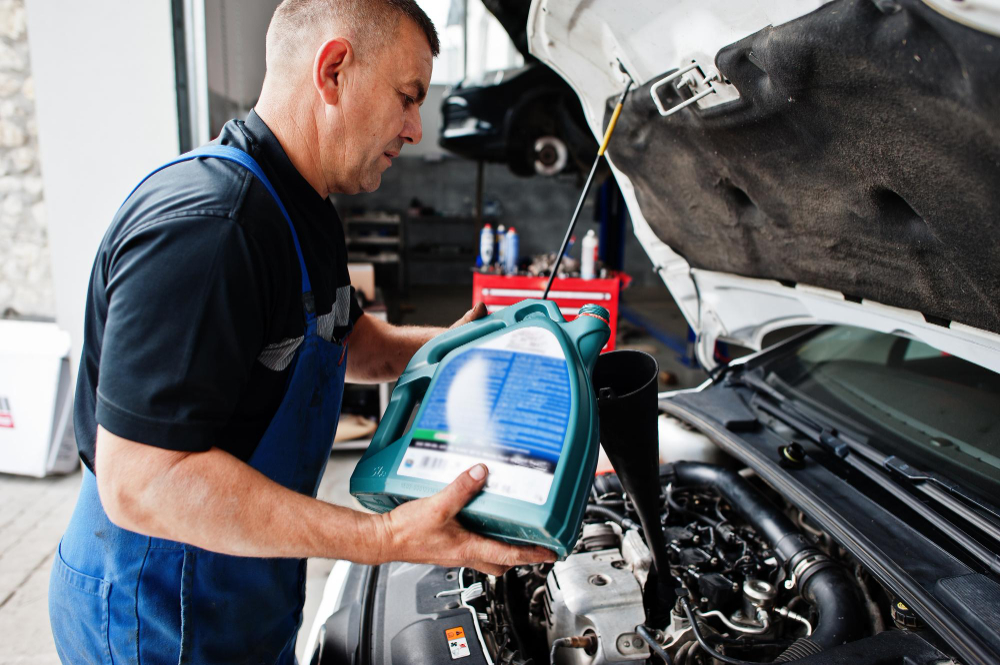
Transmission oil change in Prague: technical details
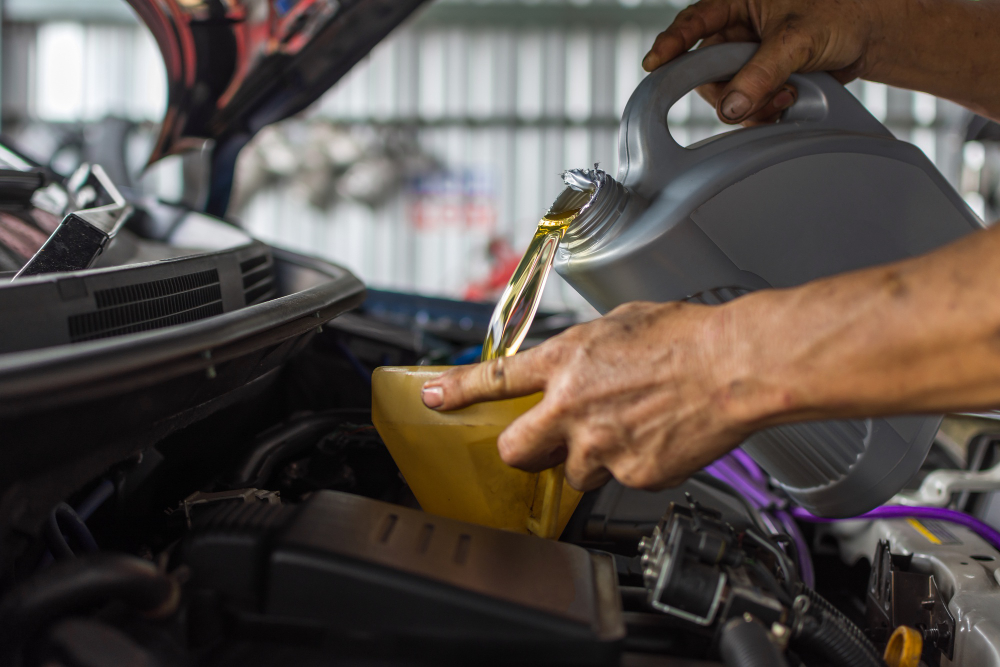
Transmission oil plays a key role in the operation of an automatic gearbox — it ensures torque transfer, hydraulic system control, lubrication and cooling of components. Over time, every ATF (Automatic Transmission Fluid) loses its properties and becomes contaminated with wear particles, which negatively affects transmission performance. To keep an automatic transmission reliable, timely oil change is necessary — let’s look at the details of this process.
Types of automatic transmissions and specifics of oil change
| Transmission type | Design features | Oil change specifics |
|---|---|---|
| AT (hydraulic torque converter) | Classic automatic with torque converter and planetary gearsets; main medium is ATF fluid. | Large oil volume (part stays in the converter). Filter must be replaced during service. Recommended ATF change interval: ~50–60,000 km (especially under heavy use). |
| CVT (continuously variable transmission) | Stepless transmission with steel belt or chain; uses special CVT fluid. | CVT fluid is thinner and contains special additives. Requires more frequent changes — ~40,000 km. Standard ATF cannot be used instead of CVT fluid! |
| DSG (dual-clutch transmission) | Automated transmission with two clutches (wet or dry); enables fast shifts without power loss. | Wet versions require regular oil and filter changes (~60,000 km). Special oil per specification (e.g., VW) must be used. Wrong fluid causes mechatronics failures. |
| 9G-Tronic | 9-speed automatic by Mercedes-Benz; sensitive to oil quality and level (filter integrated in the pan). | Requires oil per OEM spec (e.g., MB 236.16). Recommended oil + pan with filter change every ~60,000 km. |